

The Crucified Lovers
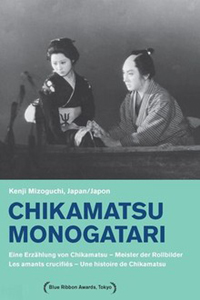
In 17th-century Japan, Ishun (Eitaro Shindo) flourishes in business but remains stingy and cruel, often mistreating his wife, Osan (Kyoko Kagawa). When her bumbling brother desperately needs money, Osan teams up with Ishun’s employee, Mohei (Kazuo Hasegawa), and steals the sum from her husband. After Ishun learns of the theft, he accuses Osan and Mohei of having an affair. Afraid of Ishun’s wrath, the pair flee, and become lovers while on the lam. But Ishun’s men aren’t far behind.
One of a string of late-career masterworks made by Kenji Mizoguchi in the early 1950s, A Story from Chikamatsu (a.k.a. The Crucified Lovers) is an exquisitely moving tale of forbidden love struggling to survive in the face of persecution. Based on a classic of eighteenth-century Japanese drama, the film traces the injustices that befall a Kyoto scroll maker’s wife and his apprentice after each is unfairly accused of wrongdoing. Bound by fate in an illicit, star-crossed romance, they go on the run in search of refuge from the punishment prescribed them: death. Shot in gorgeous, painterly style by master cinematographer Kazuo Miyagawa, this subtly sensuous indictment of societal oppression was heralded by Akira Kurosawa as a great masterpiece that could only have been made by Mizoguchi.