

The Human Condition I: No Greater Love
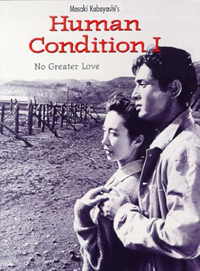
A Japanese pacifist, unable to face the dire consequences of conscientious objection, is transformed by his attempts to compromise with the demands of war-time Japan.
In World War II-era Japan, Kaji marries his sweetheart Michiko despite his misgivings about the future. To gain exemption from military service, he moves with his wife to a large mining operation in Japanese-colonized Manchuria, where he serves as a labor chief assigned to a workforce of Chinese prisoners. Kaji aggravates the camp bureaucracy by implementing humane practices to improve both labor conditions and productivity, clashing with foremen, administrators, and the Kenpeitai military police. Ultimately his efforts to grant autonomy to the POWs are undermined by scheming officials, resulting in the electrocution of several prisoners and the beheading of others accused of attempted escape. When Kaji protests the brutality, he is tortured and then drafted into the army to relieve the camp supervisors of his disruptive presence.